Reviewing the Autism Mom T-Shirt Design for Embroidery
As a designer who spends half my life staring at digitized files and the other half watching needles punch through fabric, I have learned that not every graphic translates well to thread. When I first encountered the Autism Mom T-shirt Design, my immediate reaction was cautious curiosity. The product description highlights it as a set of Print Templates and Graphics, specifically noting a 100 customized layer structure in CMYK color mode. For a printer, this is gold. For an embroiderer, however, it presents a unique challenge and opportunity that requires careful evaluation before committing to a hoop.
First Impressions and Visual Personality
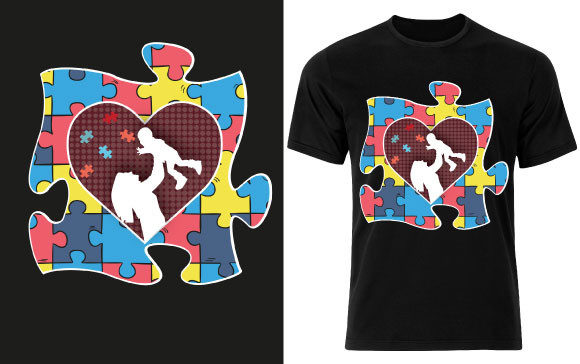
The visual personality of this design leans heavily into awareness and advocacy, which is a powerful emotional hook for customers. The layout appears balanced, but because the source files include SVG, EPS, AI, PNG, High Resolution JPG, and PDF formats, we are looking at a vector-based origin. This is crucial. It means the shapes are clean and scalable. In embroidery, clean lines reduce the risk of jagged edges or unnecessary stitch buildup. The mood is supportive and proud, fitting naturally into the niche of personalized gifts and custom apparel.
However, the mention of "100 Customized Layer" suggests complexity. In a digital sense, layers allow for easy modification. In a physical sense, too many color changes can ruin the flow of a project. My first impression is that this design needs simplification for stitching. You cannot simply load a 100-layer print file into your embroidery machine. You must interpret it. The design’s strength lies in its symbolic clarity, but its weakness, if unmodified, could be excessive density.
Real-World Application: The Sweatshirt Test
To truly evaluate the Autism Mom T-shirt Design, I imagined a real-life scenario: a custom order for a local boutique selling handmade products. The client wanted a cozy, oversized sweatshirt embroidery piece. This is a common request for Etsy sellers and small shop owners. Sweatshirts provide a stable, thick canvas that handles fill stitches well.
In this context, the design performs admirably if adapted correctly. The bold shapes typical of autism awareness graphics translate well into satin stitch borders with fill stitch interiors. On a heavy cotton blend, the texture of the thread adds a tactile warmth that flat printing cannot achieve. The visual appeal here is high; it signals quality and care. Customers trust handmade items more when the stitching looks intentional and robust. If I were producing this for a craft fair, I would focus on high-contrast thread colors to ensure the message is readable from a distance.
Navigating Fabric and Hoop Constraints
While the design shines on sweatshirts, there are areas where it must be used carefully. Let us discuss small hoop sizes and textured fabrics. If you attempt to place this entire graphic on a baby item, such as a onesie or a small bib, you will likely run into issues. Baby embroidery requires softer touches and less density to prevent puckering. The original file’s complexity might need to be reduced significantly, perhaps focusing on a single element rather than the full composition.
Furthermore, curved surfaces like caps present a challenge. Embroidering on a cap requires a design that is narrow and not too tall. If the Autism Mom T-shirt Design has wide horizontal elements, it may distort on the front panel of a hat. I would advise testing a scaled-down version on scrap fabric first. Check how the stitch density interacts with the twill fabric of the cap. Too much density on a curved surface can cause the material to pucker or the hoop marks to remain visible after washing.
Dark fabrics also require strategic planning. Since the source files are in CMYK, they are optimized for light reflection on paper. On dark navy or black apparel, you must ensure your thread colors have enough brightness. A pastel blue might disappear against black fleece. In these cases, using a white underlay or choosing brighter thread shades is essential for maintaining stitching clarity.
Commercial Viability and Brand Consistency
For commercial embroidery projects, consistency is key. Whether you are creating tote bag designs, aprons, or pillow covers, the finished product must look professional. The Autism Mom T-shirt Design offers strong brand consistency for shops focused on neurodiversity advocacy. It allows for a cohesive look across different products.
However, as a digital product seller or Etsy seller, you must consider the licensing. The product description lists various file types but does not explicitly state the embroidery license terms. Before selling finished items or digital embroidery files derived from this graphic, you must confirm the licensing rights. Using a print template for commercial embroidery without permission can lead to legal issues. Always verify if the creator allows for derivative works in thread.
Practical Designer Notes for Execution
If you decide to use this design, here are my practical notes for ensuring a high-quality result:
- Test on Scrap Fabric: Never stitch directly on the final garment. Use a similar weight and texture to check for puckering.
- Check Thread Color Contrast: Ensure the colors stand out against the fabric background. Use a black and white mockup to verify value contrast.
- Review Stitch Density: If digitizing this yourself from the SVG or AI file, reduce the density for stretchy fabrics to prevent distortion.
- Confirm Hoop Size: Measure the design dimensions against your machine’s maximum hoop size. You may need to split the design or resize it.
- Inspect Small Details: Tiny lettering or intricate corners can get lost in stitching. Simplify these areas or enlarge them slightly.
- Use Proper Stabilizer: For knit fabrics like t-shirts, use a cut-away stabilizer to support the stitches during washing.
- Verify Licensing: Confirm whether the file includes rights for commercial embroidery use before listing items for sale.
Final Verdict on the Design Assets
The Autism Mom T-shirt Design is a versatile set of graphics that, with proper adaptation, can elevate a range of embroidery projects. It is not a plug-and-play embroidery file, but rather a robust design asset that rewards thoughtful digitization. For hobbyists and makers, it offers a meaningful theme. For professional designers, it provides a clean vector base to build upon.
When used on appropriate garments like sweatshirts, tote bags, or structured caps, it enhances the perceived value of the handmade product. It speaks to a community, fostering connection and pride. Just remember to respect the technical limitations of thread and fabric. By adjusting stitch density, choosing the right stabilizer, and verifying commercial rights, you can turn these print templates into stunning, durable embroidered pieces that customers will cherish.